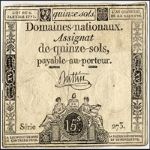
Bad Inflation

Take caution.  It’s April Fools’ Day after all.  What better day is there to keep your guard up and your wits about you?

Remember, there’s a fool on every corner and a sucker born every minute.  Avoid being one of them when at all possible; for it is both demoralizing and expensive.

Sometimes this is easier said than done – particularly when your money’s at stake.  You may have your cash safely tucked away in the bank but that doesn’t means it’s out of reach from the long arm of government mischief.

Here we’ll turn to John Maynard Keynes, a particularly devious fellow, for edification.  From his 1919 work titled, “The Economic Consequences of the Peace”…

“By a continuing process of inflation, governments can confiscate, secretly and unobserved, an important part of the wealth of their citizens.

“There is no subtler, no surer means of overturning the existing basis of society than to debauch the currency.  The process engages all the hidden forces of economic law on the side of destruction, and does it in a manner which not one man in a million is able to diagnose.” Continue reading

Posted in Inflation, MN Gordon | Tagged , , , | Leave a comment

More Certain than Death and Taxes

Job growth is finally picking up.  According to the Labor Department’s February Report, U.S. companies have added jobs for the last 12 straight months.  What’s more, some momentum seems to be building.

Here in the Golden State the employment picture is glimmering for the first time in years…

“California, which was still losing jobs as recently as September, has added nearly 200,000 jobs in that time [February 2010 through February 2011],” reported AP.  “That’s second only to Texas, which added 254,200 net jobs.

“Nearly half of that increase in California occurred in February, when the state gained 96,500 jobs.  That’s the most on records dating back to 1990.”

Still, California has quite a task to recoup the 1.3 million jobs lost during the economic bust, which began in December 2007.  Nonetheless, the best month for job creation in over two decades is a good place to work from.  Who knows?  With a little luck people may be able to actually save something for retirement. Continue reading

Posted in Inflation, MN Gordon | Tagged , , , , | Leave a comment

Removing All Doubt

Oil prices jumped above $106 per barrel this week. What gives? The short answer: global supplies are tightening while consumption is increasing.

“Energy economists continued to gauge how recent unrest in Libya, Bahrain, Yemen and Syria will affect exports from a region that produces 27 percent of the world’s oil,” explains AP.

Obviously, it will affect exports negatively. From what we gather, Libyan oil exports are shut down. Without Libya and other North African oil producers contributing to global supplies prices could really go haywire. Particularly when demand is picking up in earnest…

“Platts reports that China’s oil demand in February rose 10.1 percent from a year ago, to the second strongest level on record. It hit an all-time high in December. China is the world’s second biggest oil consumer behind the U.S.”

As supply stagnates and demand continues to increase speculators will do their best to push prices up like they did in 2008…when oil topped $140 per barrel. You can count on that. Continue reading

Posted in Economy, MN Gordon | Tagged , , , , | Leave a comment

A Modest Alternative to Monkeying with Currency Markets

Late last week, while many were busy paying tribute to their Irish brethren with good cheer and libations, the Group of Seven (G-7) nations were busy monkeying around in foreign exchange markets with their first coordinated intervention in over 10 years.  What was their goal?  To devalue the Japanese yen.

Following the earthquake, tsunami, and nuclear crisis, something a bit counterintuitive happened.  The yen didn’t go down…it went up.  In fact, not only did it go up; it soared.

“The yen surged 4.5 percent in 26 minutes March 17 to a post-World War II high,” reported Bloomberg.  Pushing up the yen was the concern that Japanese investors would convert foreign investments back into Japanese assets to pay for reconstruction.  Sensing a mass repatriation of assets was underway, foreign exchange traders did their part to further strengthen the yen.

For large exporting countries, like Japan, a stronger currency hurts their economy…their products become more expensive to international consumers and demand drops.  So the U.S. Federal Reserve, Bank of Canada, Bank of Japan, the European Central Bank, the Bank of England, the Bank of France, Germany’s Bundesbank, and the Italian Central Bank all put their citizen’s money to use in the foreign exchange market in a coordinated effort to devalue the yen. Continue reading

Posted in Economy, MN Gordon | Tagged , , , , , , | Leave a comment