 The systematic erosion of purchasing power over the last few decades has coincided directly with a devastating decline in living standards for middle-class wage earners and prudent savers alike. You can visibly see it in most cities across America.
Areas that a generation ago were nice, clean neighborhoods are now blighted and decayed. Those with the means to do so moved on long ago. Those who remain are left with the ugliness.
But that’s not all. As we recently noted, when central planners intentionally debase a currency, they don’t just erode hard-earned savings; they tear apart the very moral fabric of society.
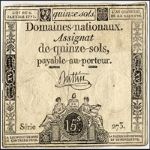
From revolutionary France’s catastrophic reliance on paper assignats to the modern Federal Reserve’s relentless balance-sheet expansions, the ruinous playbook never changes. Hard work and patient, disciplined saving are gradually replaced by financial desperation and wild, speculative gambling.
And once a populace begins to feel the suffocating squeeze of rapid dollar debasement, they look for someone – anyone – to stop the bleeding. They don’t typically point their angry fingers at the central bank or the reckless spending sprees in Washington. Instead, they look at the retail checkout counter, wrongly blaming local merchants and business owners.
They demand immediate, forceful relief from high prices. And opportunistic politicians, eager to avoid blame for the inflation they created, are more than happy to offer the brainless, counterproductive solution of government-imposed price controls.
Here in the USA, and across the entire planet, we’ve arrived at a dangerous and muddled place where the appetite for heavy-handed government intervention has crossed party lines entirely. Unaware that state-sponsored dollar debasement is the real thief in the night, everyday citizens are crying out for the state to slap artificial price caps on basic necessities.
Screwing Over American Voters
Polling reveals a startling, bipartisan consensus. According to a recent Wall Street Journal survey, voters across the entire political spectrum are rallying behind populist ideas that were once limited to the inane ramblings of socialist lunatics.
Whether it’s capping the cost of prescription drugs, childcare, or credit card interest rates, Americans are begging the government to step in and fix the price tag.
The WSJ’s findings are identical in the healthcare sector. The Center Square Voters’ Voice Poll, conducted by Noble Predictive Insights, found that an overwhelming 59 percent of American voters believe the government should limit healthcare prices to make care affordable. Only 24 percent voiced concern that such controls might limit access or stifle medical innovation. Here, pollster Mike Noble frankly summarizes the public’s temperament:
“It’s less about access to care. It’s just reining in the medical companies so they’re not screwing over the average American voter like they feel they have.”
This urge spans almost every demographic. The poll showed that 66 percent of Democrats, 56 percent of voters earning over $100,000, and 60 percent of those making under $50,000 all want healthcare price limits. Age makes little difference either. Fifty-eight percent of 18-to-29-year-olds and 56 percent of seniors over 65 agree that force is needed to get costs under control.
And it doesn’t stop with doctor bills. At the grocery store, Americans are hitting a wall of severe sticker shock. A survey by Consumer Action for a Strong Economy found that 27 percent of Americans cite groceries as their single largest affordability concern. Pew Research reports that 66 percent of the public is deeply worried about the soaring price of basic goods.
American voters, without question, are getting screwed over. But it’s not how they perceive. Higher costs, in most instances, are not the result of price gouging. Rather, they’re the effect of an eroding dollar.
Distorting Market Signals
In response, politicians are serving up the exact poison the public is asking for. Banning “price gouging” and introducing legislative crackdowns on price discrimination. There are even proposals for tens of millions in taxpayer funds for government-run grocery stores being peddled as mainstream solutions.
It sounds simple. It sounds compassionate. If food is too expensive, just pass a law that makes high prices illegal. Won’t that solve the problem?
Alas, supply and demand and the price signals that guide economic production cannot be legislated out of existence.
To understand why price controls fail every time they are attempted, you have to understand what a price represents. A price is not an arbitrary number dreamed up by a greedy shopkeeper. It is a vital signal. It communicates real-time information about supply, demand, scarcity, and input costs across a complex web of global supply chains. When a government steps in and sets an artificial price ceiling below market value, it destroys that communication system.
Take retail groceries, for example. The grocery industry operates on razor-thin profit margins, a mere 1.3 percent. Furthermore, food is highly perishable, and its supply chains are exceptionally sensitive to weather, disease outbreaks, fuel costs, and global commodity swings.
When a government tells a grocer that they cannot raise prices to reflect their skyrocketing input costs, the store doesn’t just absorb the loss forever. It stops stocking the items it’s being forced to lose money on.
When profit margins turn negative, production halts, investment dries up, and distribution breaks down. The immediate result of a price ceiling isn’t cheap abundance. It is instant scarcity, black markets, and empty shelves.
Lessons Unlearned
Proponents of price caps like to market them as modern, progressive tools for economic fairness. In reality, they’re worn-out failures with a 100 percent track record of causing disaster.
History provides a relentless string of warnings that modern policy makers choose to ignore. In America, there were numerous failed experiments with price controls in the 20th century.
For example, as part of the New Deal era economic interventions, under the Agricultural Marketing Agreement Act of 1937, the federal government established agricultural marketing orders. These orders forced raisin growers to surrender a portion of their annual crop to a government-controlled reserve to artificially limit market supply and prop up wholesale prices. The policy restricted supply and failed to increase farmer income. Yet it dragged on for decades until the Supreme Court finally struck it down in 2015.
During World War II, the Emergency Price Control Act of 1942 stabilized official price tags. But it directly caused a 7.1 percent increase in product shortages. To survive, businesses turned to extreme quality degradation (debasement of goods).
Hot dogs were filled with potato meals. Coffee was stretched using ground roasted grains. Grass and wild foliage were packaged and sold as tea leaves. Shoes were manufactured with weak synthetic soles. And textiles were made with thinner weaves. By preventing honest price discovery, citizens ended up paying the full price for severely debased goods.
Tricky Dick Nixon, in addition to closing the gold window in August 1971, also placed an executive freeze on wages and prices. While intended to control inflation, the intervention crippled agricultural supply chains.
Executive price caps on wholesale and retail food prevented farmers from raising prices to cover escalating input costs, such as feed, fuel, and fertilizer. As profit margins collapsed, farmers deliberately culled herds, culled poultry populations, and reduced livestock expansion to cut losses.
Nixon’s policies did not solve the underlying monetary causes of inflation. When price controls were lifted in 1974, pent-up price pressures exploded, resulting in double-digit inflation surges and years of stagflation throughout the remainder of the decade.
Scarcity By Design
So, too, there are countless examples of failed experiments with price controls across history and the planet. In Zimbabwe and Venezuela in the 2000s, strict price caps destroyed local manufacturing and agriculture, turning once-thriving nations into barren wasteland economies plagued by mass famine and rampant black-market trading.
There was also Argentina’s Precios Cuidados, circa 2007–2015, which targeted grocery price controls. This prompted manufacturers to rebrand products into un-capped sizes to survive. In the end, the policy did less than squat to control overall inflation or make food cheaper.
And in early 2022, facing soaring inflation, the Hungarian government introduced statutory price caps on several essential food items, including chicken breasts, pork leg, sunflower oil, sugar, wheat flour, and milk. This forced retailers to sell these food items at or below October 2021 price levels. Predictably, widespread scarcity followed, as retailers imposed strict quantity limits, and suppliers withdrew their goods from wholesale markets because selling at capped prices meant financial ruin.
Of course, the ultimate danger of price controls isn’t just empty store shelves or lower-quality goods. It’s the total destruction of civic trust. When price caps produce shortages, politicians never admit their economic policies failed. Instead, they double down. They accuse businesses of hoarding, label struggling store owners as greedy capitalists, and incite the public against their neighbors.
Regrettably, we see the early stages of this exact mindset taking root today. When gas, healthcare, and food prices surge due to the Fed printing trillions of unbacked dollars, politicians like Liz Warren line up in front of cameras to blame corporate greed. The public, desperate and confused, falls for the lies. They demand caps, taxes, and state crackdowns.
The idea that a government can print trillions of paper dollars out of thin air, inflate the monetary base, and then simply outlaw the resulting price increases is a dangerous delusion. It is the economic equivalent of trying to control diarrhea using adhesive tape.
A society that destroys its money will inevitably destroy its markets. And a society that destroys its markets will soon find itself picking through empty shelves, fighting over rations, and wondering how a country of such vast abundance turned into another cautionary tale.
[Editor’s note: Get a free copy of an important special report called, “Anti-Fragile Bargain – Why You Should Own this Monster Dividend Fortress,” when you join the Economic Prism mailing list today. If you want a special trial deal to check out MN Gordon’s Wealth Prism Letter, you can grab that here.]
Sincerely,
MN Gordon
for Economic Prism
Return from How Government Intervention Destroys Markets and Mandates Scarcity to Economic Prism