 “Of all the contrivances for cheating the laboring classes of mankind, none has been more effective than that which deludes them with paper-money.”
– Daniel Webster, 1832
Crushing the Middle Class
What if the savings in your bank account lost 50 percent of its value over the next 12 months? Would you be a tad irate? Would you wish you’d transferred some of those savings into gold today when it was merely $4,200 per ounce?
It’s unlikely the U.S. dollar will lose 50 percent of its value over the next 12-months. But, based on the Bureau of Labor Statistics’ own inflation calculator, the dollar has lost 50 percent of its value since the turn of the century. In other words, per official inflation statistics, it takes a dollar today to buy what $0.50 could buy on January 1, 2000.
Of course, we all know the BLS inflation numbers are grossly understated. When it comes to housing, it takes a dollar in 2026 to buy what $0.33 did in 2000. With respect to gold, a dollar today gets you what just $0.07 did in 2000.
Still, an official 50 percent devaluation over 26 years has turned saving, investing, and planning for the future into a cruel, unwinnable game. Unless you’re already wealthy, with a diverse pool of assets – stocks, bonds, gold, properties, farmland, all spread across several continents – you likely find yourself with nothing to show for your years of labor. And your kids, seeing this losing plight, may have taken to sports betting or speculating on cryptocurrencies with the hopes that, just maybe, with a little luck, they’ll get ahead.
John Maynard Keynes, the godfather of modern-day economic planning, in his 1919 work, The Economic Consequences of the Peace, wrote:
“There is no subtler, no surer means of overturning the existing basis of society than to debauch the currency. The process engages all the hidden forces of economic law on the side of destruction, and does it in a manner which not one man in a million is able to diagnose.”
Incidentally, Keynes attributed this acute insight to another innovative central planner, one Vladimir Lenin. Regrettably, these two visionaries predicted today’s present state of affairs with remarkable foresight.
Social Madness
Certainly, this rings true in 2026. Many people aren’t sure why their paycheck doesn’t go as far as it used to. They may vent their frustration at greedy capitalists, big oil, or foreign competitors. But few really understand that they’re being ripped off by a fiscal and monetary system that, by design, steals their money through currency debasement.
Do you think today’s typical 35-year-old millennial, who’s been paying on his student loans for over a decade, with still a decade to go, understands that in addition to having hefty taxes withheld from his paycheck every two weeks, he’s also further subsidizing social security and Medicare for aging boomers through the inflation tax?
He may have a faint inkling that things don’t quite add up. But he also thinks he’s a loser because he’s approaching middle age and cannot afford to buy a house or start a family. When he discovers the truth, that state-sponsored inflation has retarded his life, he may blow a gasket.
And now election season is upon us. Antagonism and bitterness between adherents to the two political parties, and each of their factions, have been simmering hot for years.
Without question, come election day on November 3, 2026, there will be a large collection of unhappy campers. How will the simmering pot finally boil over?
Will those who pulled the short end of the stick resort to political violence? Will they rage in the streets? Will they throw bricks, run coordinated smash and grabs, and topple police cars while setting them on fire?
What if there’s obvious election fraud, late night ballet drops, or other hints of hanky-panky? And what if President Trump doesn’t like the results? Will he declare a controlling edict of his preeminence be made the law of the land?
These, no doubt, are the sort of unpleasant questions that must be asked when mass social madness is poised to go full tilt.
Yet this prospect of mass social madness is the direct result of a debauched currency. The flim-flam of dishonest money always ends with complete financial, moral, and political breakdown. But, in the interim, the rise in prices gives rise to rampant speculation, government corruption, and a loss of moral character.
Uncertainty of the future reduces life to a game of chance. Pursuits of honest profits are replaced with passions for inordinate gains.
These are the lessons of history that America – and the world – have forgotten. These lessons are currently being relearned through the exacting tutelage of the school of hard knocks.
Lessons Written in Paper Assignats
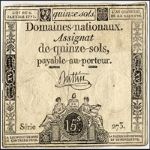
A passing look back to 1790s France offers lucid instruction into where this financial madness leads. When the revolutionary government flooded the country with paper assignats, citizens initially cheered the sudden high of artificial wealth.
Yet, as Andrew Dickson White chronicled in, Fiat Money Inflation in France, each subsequent injection of paper money required larger doses to achieve the same fleeting high. As a result, there were shorter periods of good feeling followed by deeper hangovers.
“Throughout France there came temporary good feeling. The nation was becoming inebriated with paper money. The good feeling was that of a drunkard just after his draught; and it is to be noted as a simple historical fact, corresponding to a physiological fact, that, as draughts of paper money came faster the successive periods of good feeling grew shorter.”
The consequences were far-reaching. As the assignat lost its purchasing power, thrift vanished. The traditionally frugal French public realized holding paper was a fool’s errand. Thus, a wave of senseless luxury, wild stock gambling, and widespread corruption crashed over the nation.
Today, America walks a similarly ruinous path. Decades of unbacked money creation by the Federal Reserve – legal tender notes – have hollowed out the middle class and turned sensible savers into desperate speculators. When hard work and patient saving no longer secure a comfortable future, society shifts toward immediate gratification and riverboat gambling.
We see young workers abandoning traditional careers to chase volatile cryptocurrencies, meme stocks, and sports parlays. They’re after a lucky break in an economic game that feels rigged against them.
Just as in revolutionary France, debasing the currency erodes the moral fiber of the nation. Integrity and honest labor are traded for cynicism and systemic corruption.
The Price of Dishonest Money
When money loses its anchor, the social fabric tears from top to bottom. In 1793 Paris, as hyperinflation sent the cost of basic necessities soaring, laundresses demanded the death penalty for shopkeepers who refused worthless paper.
Rather than fixing the core issue, political opportunists imposed strict price ceilings through a bogus legal contrivance called Maximum laws. This sanctioned the plunder of retail shops, while claiming merchants were simply holding back stolen goods. The resulting chaos sent innocent business owners to the guillotine while mob leaders bought peace with fresh billions in printed assignats. Here, White documents the madness:
“The washerwomen of Paris, finding soap so dear that they could hardly purchase it, insisted that all the merchants who were endeavoring to save something of their little property by refusing to sell their goods for the wretched currency with which France was flooded, should be punished with death; the women of the markets and the hangers-on of the Jacobin Club called loudly for a law ‘to equalize the value of paper money and silver coin.’ It was also demanded that a tax be laid especially on the rich, to the amount of four hundred million francs, to buy bread. [Jean-Paul] Marat declared loudly that the people, by hanging shopkeepers and plundering stores, could easily remove the trouble. The result was that on the 28th of February, 1793, at eight o’clock in the evening, a mob of men and women in disguise began plundering the stores and shops of Paris. At first they demanded only bread; soon they insisted on coffee and rice and sugar; at last they seized everything on which they could lay their hands—cloth, clothing, groceries and luxuries of every kind. Two hundred such places were plundered. This was endured for six hours and finally order was restored only by a grant of seven million francs to buy off the mob. The new political economy was beginning to bear its fruits luxuriantly. A gaudy growth of it appeared at the City Hall of Paris when, in response to the complaints of the plundered merchants, [Jacques] Roux declared, in the midst of great applause, that ‘shopkeepers were only giving back to the people what they had hitherto robbed them of.”’
Today, we can read the opening lines of what could be a similarly tragic script in America. As gas prices, grocery bills, and housing costs skyrocket from relentless dollar debasement, politicians routinely point fingers at corporate greed, price gouging, and predatory sellers.
Citizens, confused and financially squeezed, call for price controls, wealth taxes, and aggressive government intervention. They want the lies of Democratic Socialism to kiss their foreheads and somehow make everything better. Yet they are completely unaware that the underlying culprit is the central government running up unpayable debt and financing it with credit created out of thin air.
When money is debased, truth and trust are debased right alongside it. Factions turn against each other, law enforcement breaks down, and extreme political movements gain traction by promising forced economic equity.
History warns us that economic law cannot be cheated indefinitely. When a nation destroys its money, social collapse is never far behind.
Time is running out.
[Editor’s note: Get a free copy of an important special report called, “Anti-Fragile Bargain – Why You Should Own this Monster Dividend Fortress,” when you join the Economic Prism mailing list today. If you want a special trial deal to check out MN Gordon’s Wealth Prism Letter, you can grab that here.]
Sincerely,
MN Gordon
for Economic Prism
Return from What Revolutionary France Teaches Us About Fiat Money Collapse to Economic Prism