
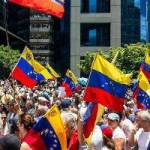
 Last weekend’s capture and extraction of Venezuelan President Nicolás Maduro was both fun and exciting. Disregarding national sovereignty and international law feels good when the outcome is favorable.
Doing something reckless, like train surfing or drunk driving, and getting away with it teaches a dangerous lesson. Namely, that you’re invincible and can take things up another notch – or two.
Does might make right?
The time to answer this question has come and gone. Wrong or right. What’s done is done. Once a cucumber has become a pickle it can never be a cucumber again. There’s no going back.
Perhaps Maduro, a corrupt and illegitimate dictator with a long list of abuses, had it coming. Handcuffs appear fitting. Certainly, opinions abound. Ours is of little concern.
What we’re interested in better understanding is, what’s the meaning of it all? The world appears to be significantly different than when the clock struck midnight on January 1, 2026.
The headlines are moving fast. By physically removing a head of state and assuming control over the world’s largest oil reserves, the U.S. has put its force behind the recently published Trump Corollary to the Monroe Doctrine – now called the Donroe Doctrine. Specifically, it has cut China off from its strategic oil investments in Venezuela.
Michael Burry, the eccentric contrarian who made a fortune shorting subprime mortgages in 2008-09, said on Monday that this is a “paradigm shift despite the market’s yawning.” To Burry’s point, on the surface, the market’s immediate reaction was quiet. Brent crude climbed less than 1 percent. And while stock futures opened higher on Monday, they didn’t exactly skyrocket.
But this doesn’t mean there aren’t significant economic and geopolitical ramifications…
Breaking BRICS in the Hot Sun
Burry believes the “game just changed” for global energy and American consumers. If he’s right, this maneuver will rapidly diminish the influence of the BRICS nations while creating a captive energy supply for American industry.
The taking of Maduro and the subsequent U.S. promise to “run” the country is a source of short-term uncertainty. But assuming it doesn’t turn into another military quagmire, this could have long-term advantages for the American economy.
For example, tapping into Venezuela’s massive reserves – the largest proven crude reserves in the world – could lead to a sustained drop in gas, diesel, and jet fuel prices. Cheap, plentiful energy is a critical input for a thriving economy. It’s what America needs to suspend its day of reckoning.
As production and transport costs decline, lower fuel costs flow through the entire supply chain. For American consumers, this could be the ultimate answer to the inflation that has dogged the 2020s.
According to Bloomberg, Chevron has 11 ships scheduled to arrive in Venezuela this month. Chevron is the only Western oil company allowed to produce and export oil in Venezuela, operating under a license granted by the Treasury. The expectation is that it will increase production and delivery of crude to refineries in the U.S. Gulf Coast and East Coast.
This could also be a boon for the big oil service companies like Halliburton, Schlumberger, and Baker Hughes. These companies will likely be tasked with upgrading Venezuela’s crumbling pipelines and refineries and maximizing production.
There’s also the question of how the U.S. takeover of Venezuelan oil assets impacts the global balance of power.
Doctrine of Disruption
If Washington succeeds in redirecting the world’s largest oil reserves to the U.S. Gulf Coast refineries, then Beijing and Moscow are looking at a major readjustment. For years, China has used its Belt and Road Initiative (BRI) to extend influence into South America, lending over $60 billion to Maduro’s government. Those loans were collateralized by future oil output. That output is now controlled by the U.S.
From a practical standpoint, about 4 to 5 percent of China’s oil imports currently come from Venezuela. If the U.S. diverts that oil to its own ports, China loses a key source of low-cost oil supply.
Moreover, this has a larger impact on China’s BRI throughout Latin-America. It demonstrates to other regional partners that Chinese financing can be severed overnight by a shift in U.S. policy.
In addition, Russia’s development rights to billions of barrels of Venezuelan oil via Roszarubezhneft, a Russian state-owned oil company, are now in legal limbo. So too, by taking control of Venezuelan crude, the U.S. minimizes the influence of Russian oil on the global market. As Venezuela’s output is restored and modernized by American contractors, Russia will lose the strategic leverage it has over energy markets.
If the U.S. successfully ramps Venezuelan production back to its peak of 3 million barrels per day, the resulting global oversupply will drive prices down. A drop in oil prices below $50 per barrel would be devastating for Moscow’s war-inflated finances.
While there are reasons to be bullish on the economic upside for America, there’s also potential fallout. The U.S. captured a dictator. But it also took on a nation in collapse.
Seizing the Orinoco
Ask any poker player. A massive win at the table often comes with a ‘bad beat’ for someone else. In this case, the risks are as deep as the Orinoco Belt itself. While the prospect of several decades of $2.00 per gallon gas is tempting, the reality of running a nation in collapse is a potential nightmare.
What President Trump calls a liberation, leaders in Mexico City, Brasília, and Bogotá are calling aggression and recolonization. By invoking the Trump Corollary, the U.S. has effectively told every sovereign nation in the hemisphere that their borders only matter so long as they don’t interfere with America’s interests.
What sort of blowback could result?
Could neighbors like Colombia or Brazil be compelled to pivot even harder toward the BRICS bloc for protection? Instead of isolating China, the U.S. might have just given every Latin American nation a reason to sign a mutual defense pact with Beijing.
Likewise, the influx of Venezuelan heavy crude is not without problems. Most U.S. refineries are optimized for light, sweet crude. To process the sludge coming out of Venezuela, massive, multi-billion-dollar upgrades will be needed to Gulf Coast facilities.
Also, by centering the Venezuelan recovery entirely on oil, the U.S. risks creating a concentrated economy on a national scale. If oil prices stay low, Venezuela’s economy will continue in chaos, potentially leading to a permanent U.S. military presence just to keep the lights on.
In short, the Donroe Doctrine represents a high-stakes gamble, trading international law for energy dominance. Seizing Venezuela’s reserves could slow inflation and weaken adversaries like China and Russia. But it comes at the risk of regional blowback and costly military entanglements.
In the end, long after Trump has taken his last breath, the United States may find that the true cost of seizing the Orinoco is a hemisphere permanently turned against it.
[Editor’s note: Join the Economic Prism mailing list and get a free copy of an important special report called, “Utility Payment Wealth – Profit from Henry Ford’s Dream City Business Model.” If you want a special trial deal to check out MN Gordon’s Wealth Prism Letter, you can grab that here.]
Sincerely,
MN Gordon
for Economic Prism



If Haliburton said it was forced to leave Venezuela because it would have been in violation of sanctions and Exxon says Venezuela is now “un-investible”, clearly the oil itself is not the issue. The issue was the Bolivarian Revolution trading oil for a commodity or service, avoiding the use of the USD. That was Saddam’s “sin” and is Iran’s “sin”. It’s not the oil, it’s the fiat currency petro-dollar upon which the US relies..
Bullshit. It was about the oil and you only need to listen to the Dumpster mouth to know that.
DON’T CALL IT THEFT AND MURDER.
CALL IT “STRAGETY”
Piracy is piracy and we don’t usually allow pirates to redefine their actions in that regard. Live by the sword and you cert6ainly don’t get to whine when you’re put to the sword either. The US’ turn approaches closer with each new outrage.