
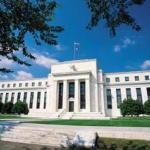
 Over the last few years, it appeared that the Federal Reserve was finally attempting to get its house in order. After the insane pandemic-era peaks, where its balance sheet ballooned to over $8.9 trillion, the central bank spent years on a steady program of balance sheet reduction.
Through a process called Quantitative Tightening (QT), the Fed allowed bonds to roll off the books without replacing them. It successfully shrank its balance sheet to about $6.5 trillion by December 2025.
But if you’ve been watching the Fed’s balance sheet lately, the trend has pulled a U-turn. As of April 2026, that number has crept back up to over $6.7 trillion. The great contraction is over. The era of balance sheet expansion has returned.
So, why is the Fed’s balance sheet growing again? What does this mean for the value of the dollar in your pocket? And how does billionaire Treasury Secretary Scott Bessent – and his defense of swap lines to the Middle East – fit into this puzzle?
To understand why the Fed is expanding its balance sheet again, you must understand the mechanics of the financial system. Banks, as you know, no longer keep cash in a vault. Instead, they hold reserves at the Fed to ensure they can handle daily transactions and meet regulatory requirements.
By late 2025, the Fed realized it had sucked too much liquidity out of the system. Interest rates in the repo market, where banks and hedge funds borrow cash overnight, started getting jumpy. This indicated that the Fed’s desire to provide ample reserves had overshot and become scarce reserves.
Greasing the Gears
In December 2025, the FOMC officially ended QT. To keep the gears of the financial system greased, the Fed began purchasing roughly $40 billion in short-term Treasury bills per month.
Unlike the massive Quantitative Easing (QE) of the past, which was designed to lower long-term interest rates, this new expansion is framed as technical. The Fed argues they aren’t trying to stimulate the economy, but that they are simply providing the necessary reserves to prevent a systemic crisis.
The Fed can say whatever it wants. However, from our perspective, nearly $200 billion in growth in just a few months looks a lot like the money printer is back in business. Moreover, there will be plenty of unintended consequences.
This new liquidity isn’t just money sitting on the digital accounting books. It’s supplying active grease for a very heavy financial machine.
For example, this year nearly $9.6 trillion in U.S. government debt is maturing. That’s over 25 percent of the total national debt. To prevent a spike in interest rates when the government tries to roll over this debt, the Fed needs to ensure the market has enough liquidity to absorb the new bond issuances.
There’s also the need to support the standing repo facility. By expanding the balance sheet, the Fed makes sure that large banks can instantly swap their Treasuries for cash. The intent is to prevent the kind of liquidity shock that nearly collapsed markets in late 2019, in the months before the faux coronavirus pandemic.
Yet the Fed doesn’t have the money to supply this liquidity. Rather, it makes digital notations to its books and creates the credit out of this air. This new credit is then used to buy assets, distorting prices throughout the economy.
This is where it gets personal. When the Fed expands its balance sheet, and buys assets with the fabricated credit, it’s effectively debasing the dollar.
Sacrificing the Dollar
In a healthy economy, the supply of money should roughly track the supply of goods and services. When the Fed expands the money supply faster than the economy grows, each individual dollar represents a smaller slice of the total economic pie.
Debasement isn’t a sudden crash. It’s a slow leak. It shows up in the form of inflation where the price of assets – stocks, real estate, and gold – rise, along with consumer prices, even as the economy stalls.
By April 2026, with the national debt at $39.1 trillion, the Fed has a limited ability to protect the dollar. It wants to keep inflation low. But it also must keep the government’s borrowing costs down and the banking system stable. Choosing the latter two often means sacrificing the dollar’s purchasing power. This week, like a deer in the headlights, the FOMC elected to hold the federal funds rate steady at 3.5 to 3.75 percent while reinvesting all principal payments from the Federal Reserve’s holdings of agency securities into Treasury bills
While the Fed is busy expanding its balance sheet, and debasing the dollar, U.S. Treasury Secretary Scott Bessent is busy managing international money flows. Recently, the U.S. has reaped a geopolitical whirlwind. The U.S. – Israeli attack on Iran has disrupted oil flows in the Middle East. This has put immense pressure on countries that peg their currency to the U.S. dollar, including the United Arab Emirates (UAE).
The proposed solution involved something called swap lines. A currency swap line is essentially a “you scratch my back, I’ll scratch yours” agreement between central banks.
The Fed, working hand in glove with the Treasury, provides dollars to a foreign central bank in exchange for their local currency. This ensures that the foreign country has enough dollars to keep its economy running without having to dump its holdings of U.S. Treasuries on the open market.
The Dubai Ultimatum
By considering swap lines to the UAE and other Gulf allies, Bessent is opening the door to additional money supply expansion. He’s essentially extending the reach of the Fed’s liquidity to the entire world.
Bessent’s objective is to prevent a fire sale of U.S. Treasuries and stocks. The UAE holds hundreds of billions in U.S. assets. If they run out of liquid dollars to defend their currency peg, they would be forced to sell those Treasuries and stocks. A massive sell-off from the Gulf would crash the U.S. bond market and send interest rates skyrocketing.
At the same time, the UAE isn’t patiently sitting around waiting for a handout from Bessent. It’s taking matters into its own hands. In a surprise move, the UAE announced this week that it is officially exiting OPEC, effective May 1. By bailing on the oil cartel, Abu Dhabi has signaled it’s had enough of the production caps that limit its own growth while balancing someone else’s books.
This dramatic decision to leave OPEC also ties back to what currency will be used to settle oil trade. Will it remain the petrodollar, or will it shift to the petroyuan? Jim Rowland, of Barchart Insights, provides the following analysis:
“Notably, global oil sales are priced in dollars under the petrodollar system, which is the primary reason that most of the Gulf states have defaulted to a US dollar peg for decades. With the UAE exiting the world’s foremost oil price-setting cartel at the same time that it’s threatening to settle oil transactions in Chinese yuan, the Treasury has significant diplomatic and economic impetus to provide its longtime Gulf ally with whatever currency swap line it might request.”
In other words, the Treasury must give the UAE what it demands to help ensure the U.S. dollar remains the dominant currency for oil transactions.
Once again, as the Fed cranks up the printing press, whether it’s to save a bank in New York or a currency peg in Dubai, the solution remains the same. More dollars, more debt, and less purchasing power for everyone else – including you.
[Editor’s note: Get a free copy of an important special report called, “Cash Machine – Why You Should Own this Mineral Royalty with a 12% Yield,” when you join the Economic Prism mailing list today. If you want a special trial deal to check out MN Gordon’s Wealth Prism Letter, you can grab that here.]
Sincerely,
MN Gordon
for Economic Prism