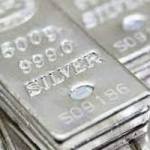
 “Commercial banks—that is, fractional reserve banks—create money out of thin air. Essentially they do it in the same way as counterfeiters.”
– Murry Rothbard, The Mystery of Banking (1983)
Honest Banking
Imagine walking up to a bank counter, handing over a heavy leather pouch of fine silver coins, and receiving a simple piece of paper in return. That paper isn’t a promise that the bank hopes to honor if nobody panics. It isn’t tied to a liability for a complex loan scheme. It is a 100 percent backed warehouse receipt.
If you want your exact silver back tomorrow, or ten years later, it’s waiting for you, in custody, in a vault.
That was the everyday reality at the Bank of Hamburg, which was founded in 1619. For over two centuries, this legendary institution operated on a principle so straightforward it sounds almost alien to modern ears: 100 percent reserve banking.
When Napoleon Bonaparte marched into Hamburg in 1813 and seized the bank’s vault, his troops audited the books. The liabilities stood at 7,489,343 marks. The physical silver sitting in the vault? 7,506,956 marks. The bank actually held 17,613 more marks in silver than it owed to its depositors.
Napoleon looted the vault anyway. He hauled away the treasure. In return, he left behind French government securities of dubious worth. That single act of foreign aggression broke the chain of full convertibility at the Bank of Hamburg. After that, like most other banks, it converted the paper into fractional money, which eventually led to the bank’s liquidation in 1871 at the time of German unification.
When the Bank of Hamburg closed its doors, it marked the end of an era. The death of 100 percent receipt money and the undisputed rise of fractional reserve banking.
To understand why our modern financial world swings wildly between explosive market booms and painful economic busts, you must understand what we lost when we abandoned Hamburg’s honest banking model.
Receipt Money vs. The Great Credit Creation Trick
Here, let’s look at two fundamentally different concepts of money. Receipt money and fractional money. It’s important to appreciate the distinction.
At the Bank of Hamburg, bank money served purely as a claims check – a receipt – for real wealth. Thus, it operated much like a secure warehouse for its depositors.
When neighboring princes diluted their own coinage with cheap metals, Hamburg steadfastly refused to play along. The bank measured silver strictly by weight and purity to preserve the unblemished integrity of the old Reichsthaler standard.
Money was never conjured out of thin air. For every hundred units of paper circulating in commerce, a matching hundred units of fine silver sat safely inside the vault. This unyielding discipline inspired 18th-century economist Paul Jacob Marberger to marvel at how account holders enjoyed immediate, crystal-clear transparency on their holdings, entirely free from smoke, mirrors, or hidden risk.
In such a system, money creation remained tightly anchored to real economic production. By this, the only way to generate more bank money was to mine, refine, or trade for physical silver.
This is diametrically opposed to fractional reserve banking, where a deposit isn’t a warehouse claim; rather, it’s a loan to the bank.
If you deposit $1,000 in a modern bank, the bank doesn’t hold it in a vault. It keeps a fraction, say 10 percent, and lends out the remaining $900. The borrower spends that $900, which gets deposited in another bank. That second bank keeps $90 and lends out $810.
Suddenly, your original $1,000 in physical cash has been pyramided into $2,710 of active spending power in the economy. New money was created out of thin air via debt.
How Fractional Money Drives the Credit Cycle
This dynamic matters far beyond the realm of trust and deception. What is important to understand is that fractional money serves as the hidden engine driving the boom-and-bust credit cycle. When banks expand credit faster than real savings accumulate, they artificially suppress the cost of borrowing. This sets off an economic illusion.
In the initial phase, cheap and abundant loans spark an artificial boom. Seeing easy access to capital, businesses launch ambitious long-term projects – constructing factories, acquiring real estate, or rapidly expanding data centers – while consumers feel increasingly wealthy as leverage inflates housing and stock prices.
Eventually, this momentum hits the wall of reality in the malinvestment trap. Because the expansion was fueled by newly created credit rather than a genuine pool of saved resources, the physical assets required to complete these projects – such as labor, raw materials, and energy – grow scarce. As competition for these real goods intensifies, prices surge, and inflation spreads like an influenza virus across the broader economy.
To rein in runaway inflation, credit creation must slow or contract, followed by the inevitable bust. Projects built on the shaky foundation of artificially cheap money suddenly turn unprofitable. Asset bubbles pop, debt defaults multiply, and unemployment rises as panic selling forces the market to liquidate unsustainable investments.
Under a strict 100-percent receipt standard like the Bank of Hamburg’s, this systemic roller coaster remains entirely impossible. Money can only be lent when someone genuinely chooses to forfeit current consumption and set real savings aside.
If fractional reserve banking is inherently unstable and prone to bank runs, why did every major economy adopt it?
Governments and commercial banks realized that while fractional banking creates severe instability, it also creates massive short-term growth and endless funding for government spending. To stop the banking system from collapsing every time depositors demanded their real cash back, nations created central banks to serve as the lender of last resort. In the United States, that role falls to the Federal Reserve.
Instead of letting the market discipline over-extended banks and reward prudent banks, central banks manage the total volume of money and credit across the entire nation. They adjust policy interest rates, print reserve currency, and buy government debt to keep the perilous pyramid of credit and debt ever expanding.
Debt, Inflation, and Dilemmas
This brings us straight to the present day. This week, for example, the tension between central planning and economic reality played out at the Federal Open Market Committee (FOMC) meeting on October 27 and 28.
Fresh off a September rate hike, the Fed decided to hit the pause button on Wednesday. The central bank kept the federal funds rate locked at 3.75 percent to 4.00 percent. Nonetheless, the decision sparked a rare split vote, with Cleveland Fed President Beth Hammack and Governor Lisa Cook dissenting in favor of a quarter-point hike.
And who can blame them?
The latest producer price index (PPI) report shows wholesale prices rising at an annual rate of 6.3 percent. And the latest reading of the consumer price index (CPI) shows consumer prices increasing at an annualized rate of 3.7 percent. With the midterm elections just five days away, Fed Chair Kevin Warsh insisted “politics played no role” in the pause. He also noted that while their “monetary medicine” is starting to work, the job of taming inflation is far from over.
The Fed, for better or worse, endeavors to toe the line between the unavoidable consequences of fractional money. Decades of manipulated credit flows mean that every additional rate hike risks triggering a credit crunch in over-leveraged sectors of the economy, while every rate cut risks reigniting the very price inflation they are trying to tame.
For more than two centuries, the Bank of Hamburg proved that a world-class trading hub didn’t need debt manipulation, artificial credit booms, or degraded currencies to thrive. By treating money as an exact, unforgeable claim check on physical wealth, they wiped out systemic bank runs and gave merchants absolute certainty.
By comparison, today’s unrelenting cycle of boom and bust, and all the histrionics that come with it, is getting old. Obsessing over Fed press conferences. Parsing of interest rate odds. Bracing for the next market cycle.
Today’s level of economic volatility is not normal. Rather, the wild swings, asset bubbles, and sudden crunches are the direct consequence of a fractional reserve regime.
In the year 2026, silver vaults and 100 percent receipt checks are but memories of a bygone, more honest world. Still, the legacy of the Bank of Hamburg reminds us of a timeless economic truth. When money is created out of debt, stability is always an illusion. Sooner or later, the credit cycle demands reckoning.
[Editor’s note: Get a free copy of an important special report called, “Anti-Fragile Bargain – Why You Should Own this Monster Dividend Fortress,” when you join the Economic Prism mailing list today. If you want a special trial deal to check out MN Gordon’s Wealth Prism Letter, you can grab that here.]
Sincerely,
MN Gordon
for Economic Prism
Return from The Hidden Engines of Booms and Busts to Economic Prism